The seed that would grow into Navesink River Rowing was planted by Charlie Gross. In the early 1980s, Charlie, who had rowed at the University of Wisconsin and was now living in Fair Haven, NJ, became a salesman for Alden Rowing shells. As a way to make sales, he ran ads in a local newspaper, the Red Bank Register, offering free sculling lessons. Soon, he had sold a number of shells and around that grew up a small group of rowers that rowed together and informally called themselves the New Jersey Rowing Association.
In 1984 the group got more organized. The name Navesink River Rowing Club was adopted. Charlie Gross called the rowers together at Bart Donahue’s house for a meeting (Bart had long been involved in rowing, had built several wooden rowing shells, and was a US Rowing Association official). One of the original members, Joanne Stolen, recalled:
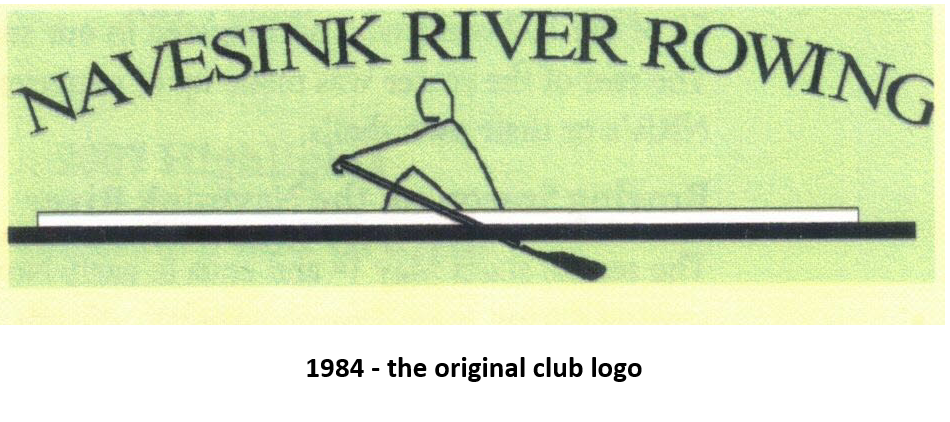
Charlie sat us down with a piece of paper and crayons. He said we needed a logo for the club. Everyone contributed a design … Apparently my design caught on and won the vote.
Finding a Home base
Also in 1984, the club reached an agreement with the owner of a local marina on the Navesink River, Fair Haven Yacht Works, to lease space in the marina yard for storing the members’ rowing shells. A beach adjacent to the marina provided a convenient spot for launching the shells.
Beginners and Youth Rowing - the Early Days
Early on, Steve Wagner, at the time freshman’s men coach at Rutgers University and director of the Craftsbury Sculling Center in Vermont, was brought in to teach a sculling clinic. Experienced rowers at the club also offered sculling lessons to beginners, both adults and youth.
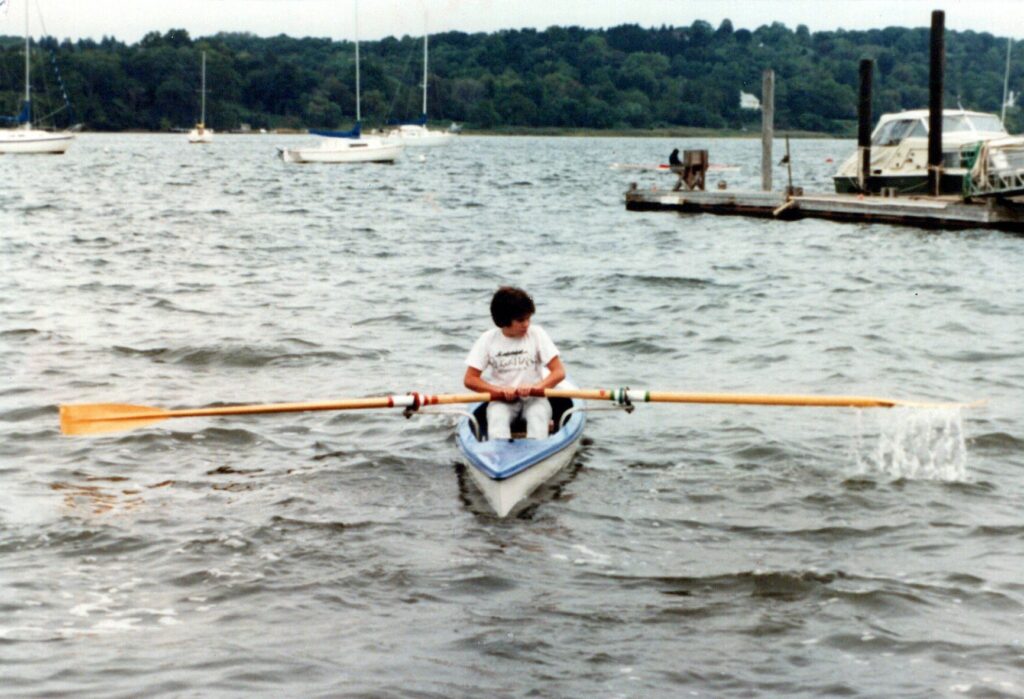
1987 - a beginner sculler practicing at the Fair Haven Yacht Works site
An early club member and youth sculler who achieved great success was Betsy Burlew of Fair Haven. Betsy started rowing and training in a single scull while she was in high school. She won the National Junior Singles championship in 1982 and the Senior Singles Championship in 1985.
Early Masters rowing
From its beginning, club members were competing in local regattas. The first race won by club members was at the Ship-Shield Regatta in Burlington, NJ in October of 1984. Dick Comtois, Charlie Gross, Dave Mund, and Bob Verbrugge won the race rowing a straight four that wasn’t an actual racing shell. It was a Pocock “gig”, i.e. a practice shell for beginners, acquired from Trinity College, that weighed 110 lbs. and was affectionately known as “the Pig”.
The next year, 1985, club members chipped in and bought a used 4+ racing shell from Undine Boat Club in Philadelphia. With better equipment, the club expanded its racing schedule. It competed at the National Masters Rowing Regatta on Philadelphia’s Boathouse Row in the Men’s 4 and competed in singles and doubles rec races rowing Alden Shells. It also competed at the Toms River Rowing Regatta.
A milestone was reached in 1986 when the club hosted its first rowing regatta, though not on its home waters. The Navesink Invitational Regatta was a sprint regatta for youth and masters held on the rowing course at Mercer County Park, NJ. Navesink completed against Viking Rowing Club, Lake Carnegie, and Oneida; the club placed second at the regatta.
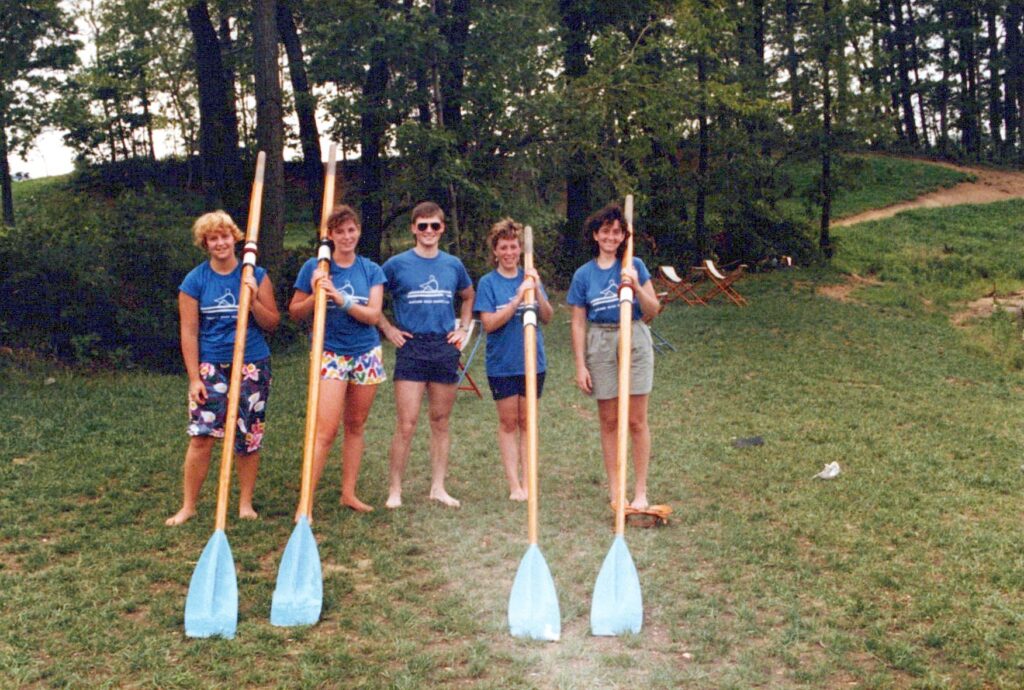
1986 - Bobbie Carroll, Rebecca Rothstein, John Birkenmeier (cox), Kelly Quinn, and Kathy Donohue competed in the Women's Junior 4 at the Navesink Invitational Regatta
1986 was also the first year when the club attended the famous Head of the Charles Regatta, racing in the Club Four event. This would be the start of a 15-year stretch (excepting 1991) where the club raced at one or more events at the Head of the Charles.
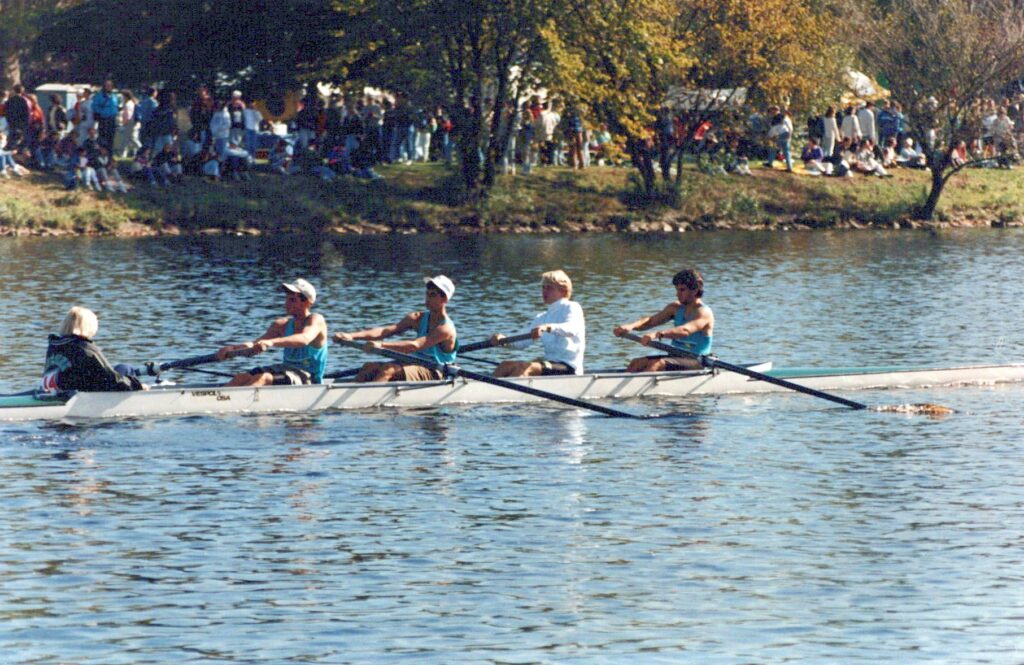
1987 - NRR rowing in the Club 4 event at the Head of the Charles
By the 1990s, the club had a core group of experienced masters rowers who were competing at major regattas, such as the Diamond States Masters, Head of the Schuylkill, Kings Head Regatta, Wye Island Regatta, Head of the Connecticut, and, of course, the Head of the Charles – and winning medals. Most of the masters rowers trained for and competed in sculling events.
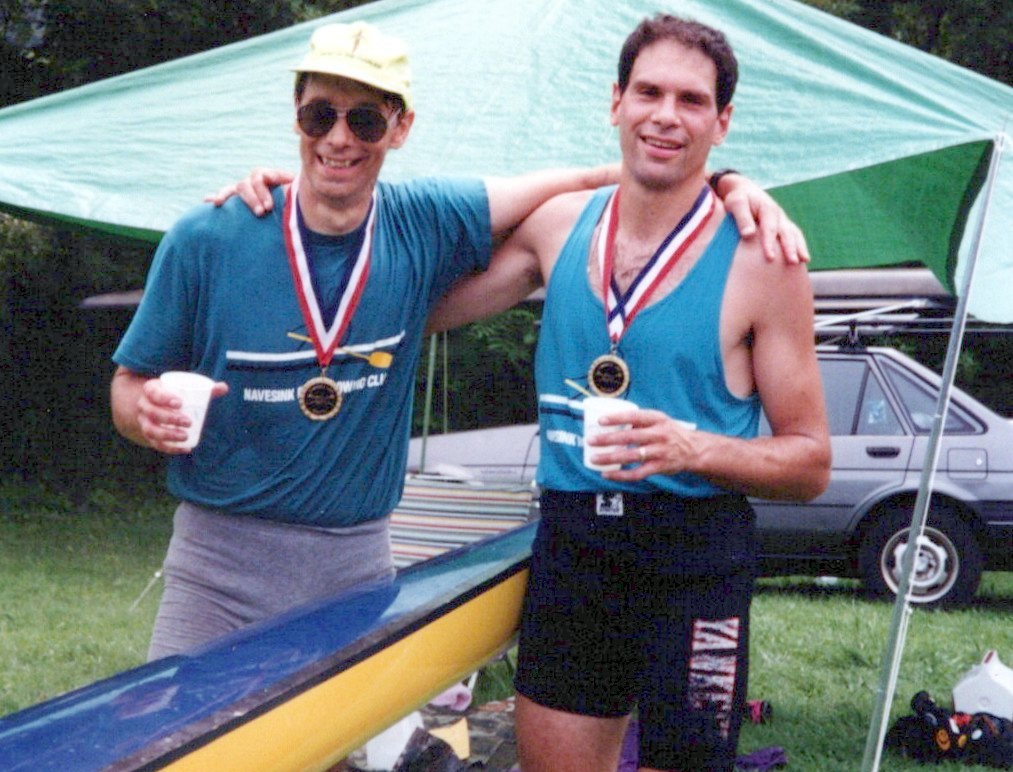
1987 - Charlie Gross and Joel Levinson with medals won at the Carnegie Lake Regatta
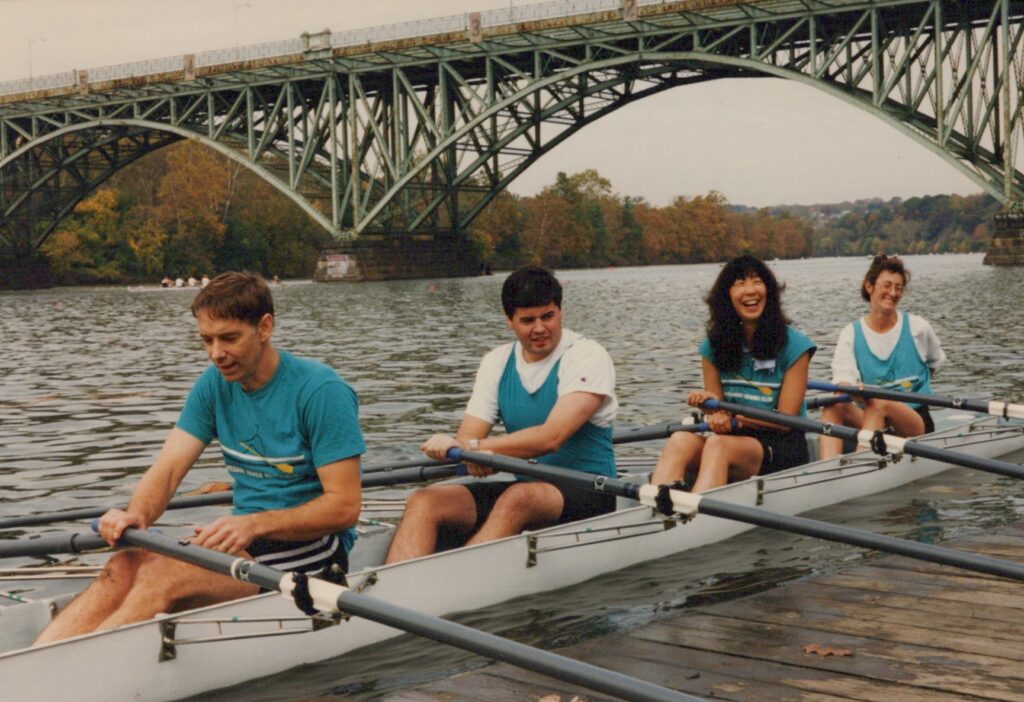
1996 - Charlie Gross, Bill Looney, Joanne Stolen, and Dianne Sciliano launching at the Head of the Schuylkill Regatta
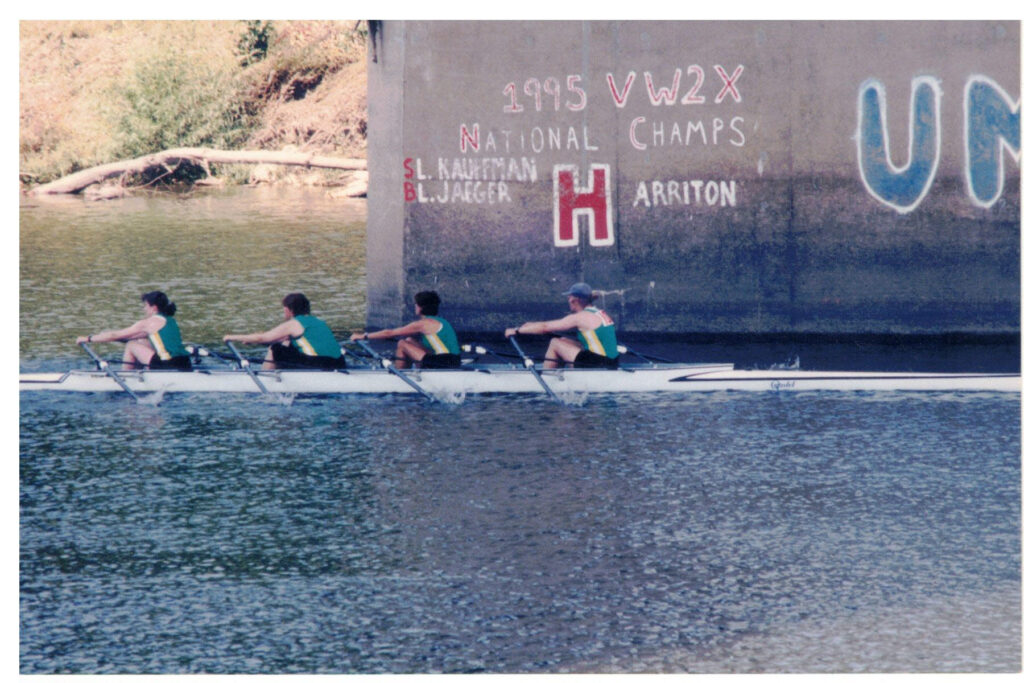
1999 - Laura Locke, Susan Meltsner, MaryJo Rizzolo, and Karen Harasymiak racing at the Kings Head Regatta
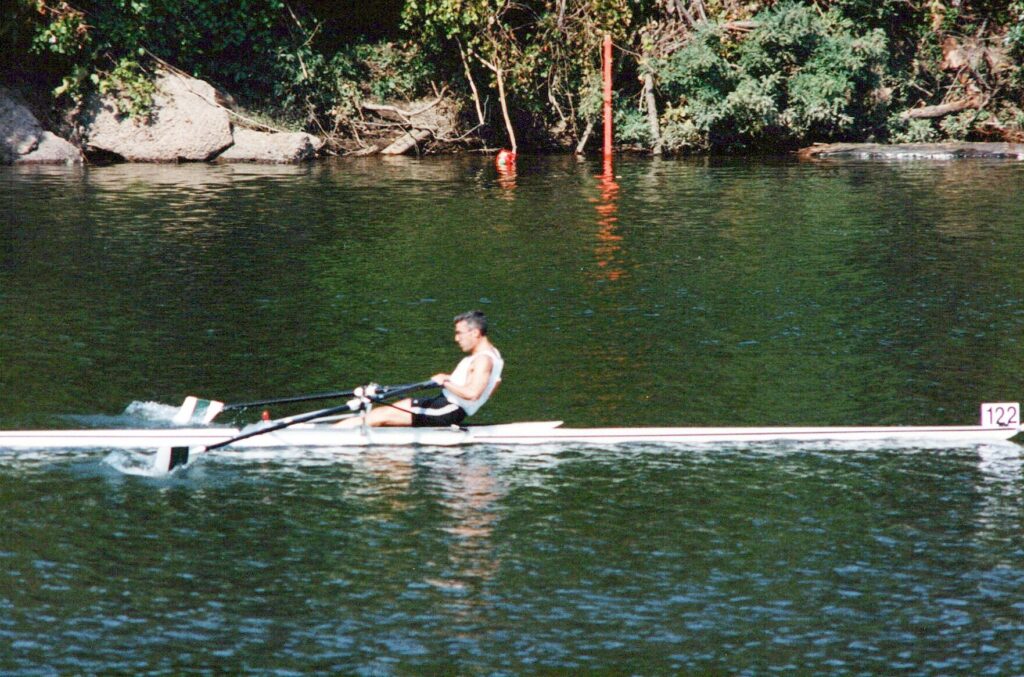
2000 - Mark Malone racing at the Kings Head Regatta
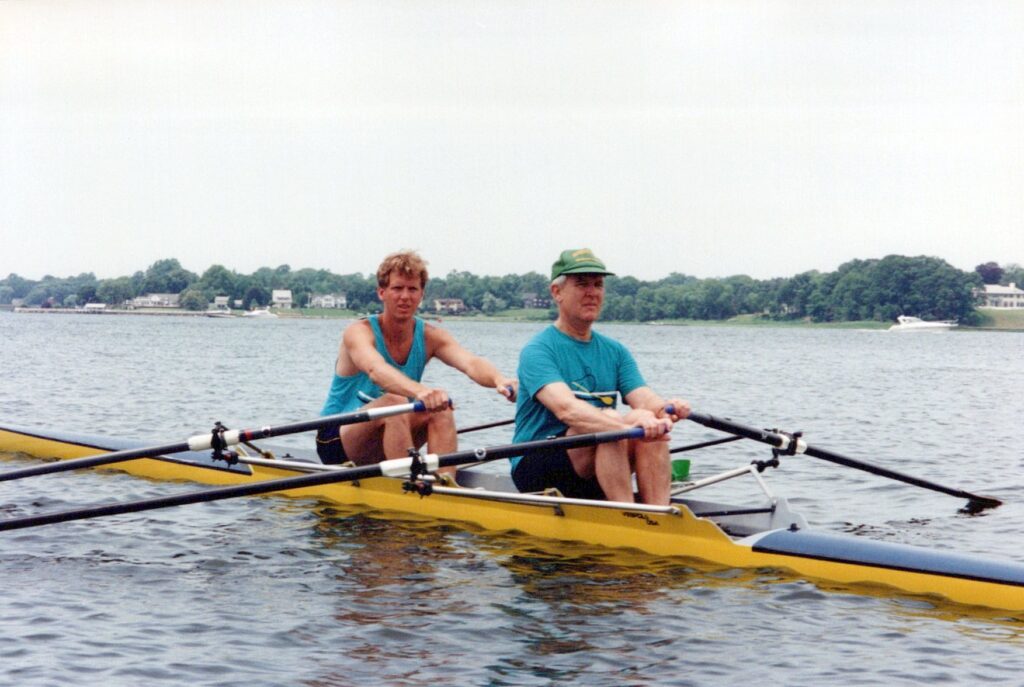
2000 - John Crilly and King Sorenson training on the Navesink River
During the 1990s, the club also became more formally organized. Thanks to the work of members King Sorenson and Karen Harasymiak, the club incorporated in 1997, and in 1998, it was granted 501c3 status by the IRS. As an educational organization under 501c3, the club describes its purpose as “successfully teach rowing skills to adults and children, provide rowing equipment and coaches and access to the Navesink River to any member of the public”.
A New Home
In 1999, the club faced a crisis. Its long-time home, the Fair Haven Yacht Works marina, changed hands, and the new owners informed the club they would not renew the lease of space to the club the following year.
In 2001, the CEO of Hovnanian Enterprises, Ara Hovnanian, graciously gave the club permission to use part of Navesink riverfront land owned by the company located at the foot of Maple Ave in Red Bank, NJ. City officials in Red Bank were supportive of the club and its mission, and the club was granted approval to use the location by the town’s zoning board. The club set up a storage shed for oars and equipment and racks for shell storage on the property, and rowing was resumed.
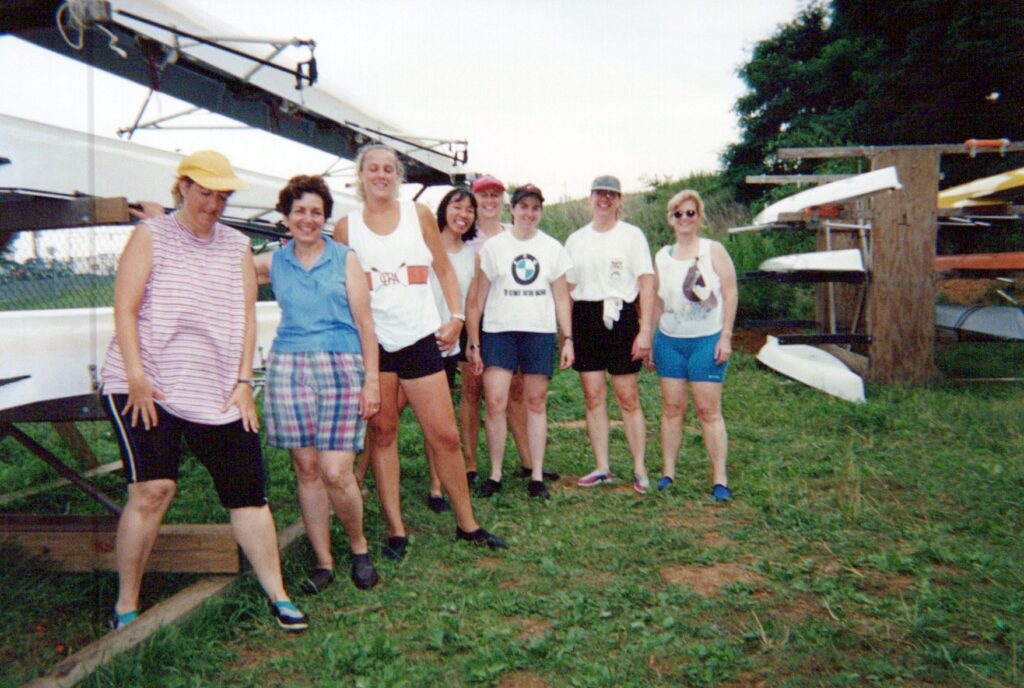
2001 - Women Master rowers at the new Red Bank site
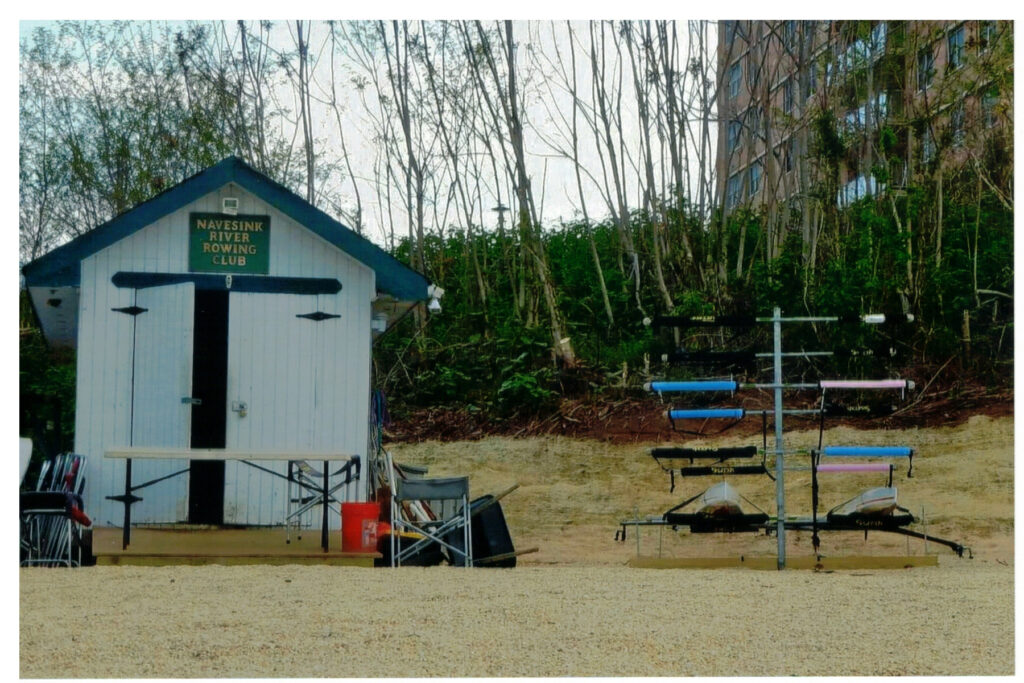
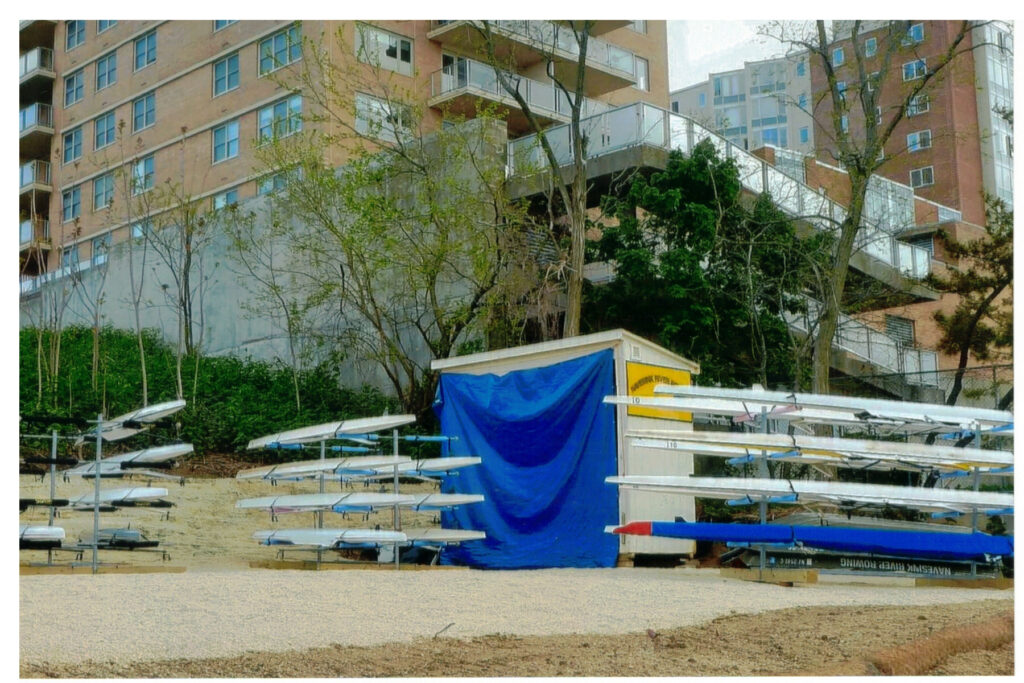
The home base crisis returned in 2002 when Hovnanian Enterprises decided to build a new corporate headquarters on the site used by the club. Fortunately, a section of riverfront property, owned by the Salvation Army, adjacent to the Hovnanian property and suitable for rowing, was available. The Salvation Army agreed to let the club use this spot, with Hovanian allowing access across their property to the site. The club relocated to this site in 2003. Though the property has changed hands several times over the following years, it remains the club’s home today, with the support of the current owner, Springpoint Senior Living.
With much more space available at its new location, the club was able to expand its rowing programs. Bill Scholtz, who rowed varsity at Brown University, joined the club and helped ramp up the club’s youth rowing program. The club acquired more rowing shells. Keeping its focus on sculling, the shells were primarily singles, doubles and quads. A boat trailer, built by club member Bob Bartlett, allowed the club to transport multiple shells and enter more events, both youth and masters, at regattas. By 2005, at the Kings Head Regatta, NRR had crews racing in 4 quad events, 3 doubles events, and 3 singles events.
By 2009, the club hit a new peak when it had 12 boats entered in the Kings Head regatta – 5 youth quads, a youth double, a youth single, 3 masters quads, a masters single and masters double – the largest contingent to race at a single regatta up to that time.
2003 - NRR member Bob Bartlett with trailer he built for the club
Community Outreach
One of the goals of Navesink River Rowing is to serve as an active and integral part of the community. The move to the new site in Red Bank opened up new opportunities to do this.
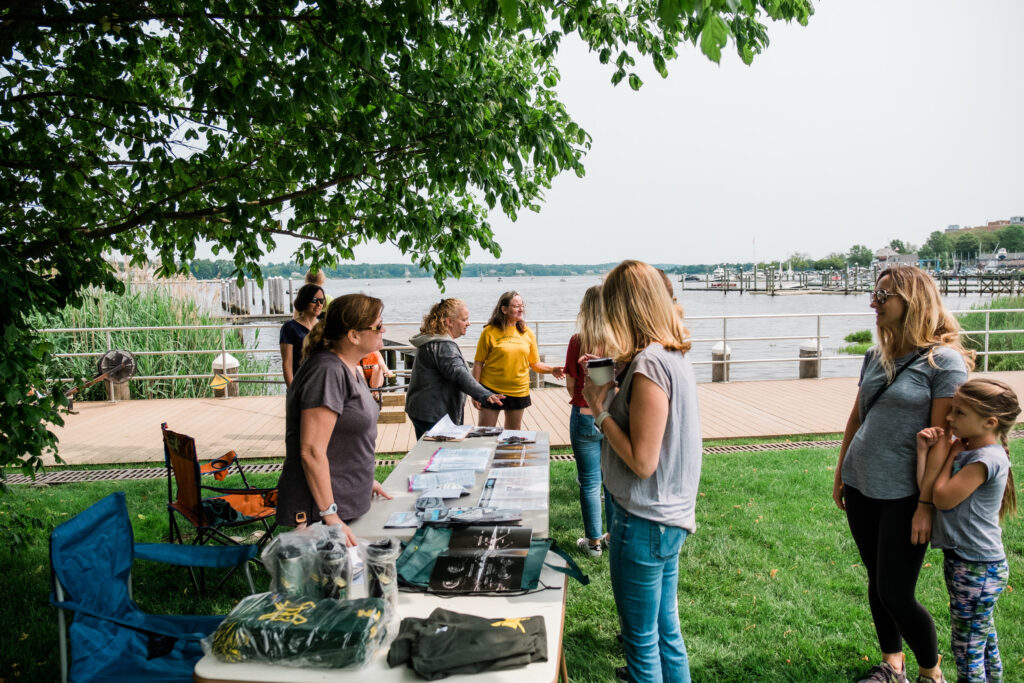
One activity that is a mainstay for the club is participation in US Rowing’s National Learn to Row Day. National Learn to Row Day is an annual day where clubs are encouraged to host learn to row opportunities in their community. Participants learn the basics of rowing terminology, technique, equipment, benefits of the sport, and connect with other rowers. NRR has hosted many Open House days over the years, often on National Learn to Row Day. This has led to many local community members joining the club and enjoying the sport of rowing.
2019 - Club members welcoming visitors at an Open House
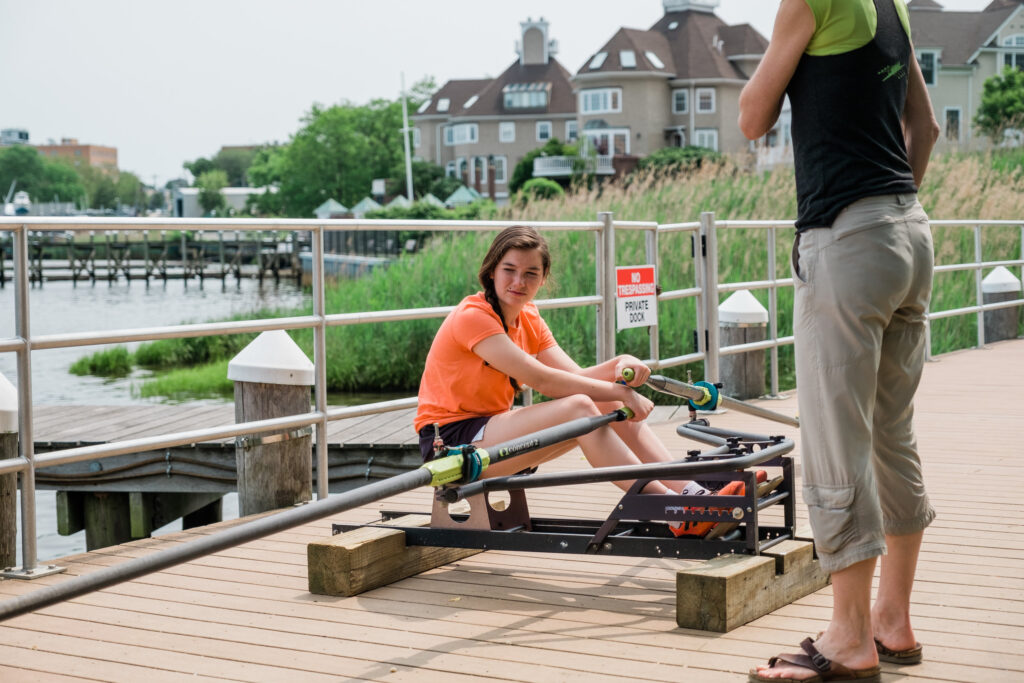
2019 - A young woman trying out rowing on an oarmaster at a club Open House
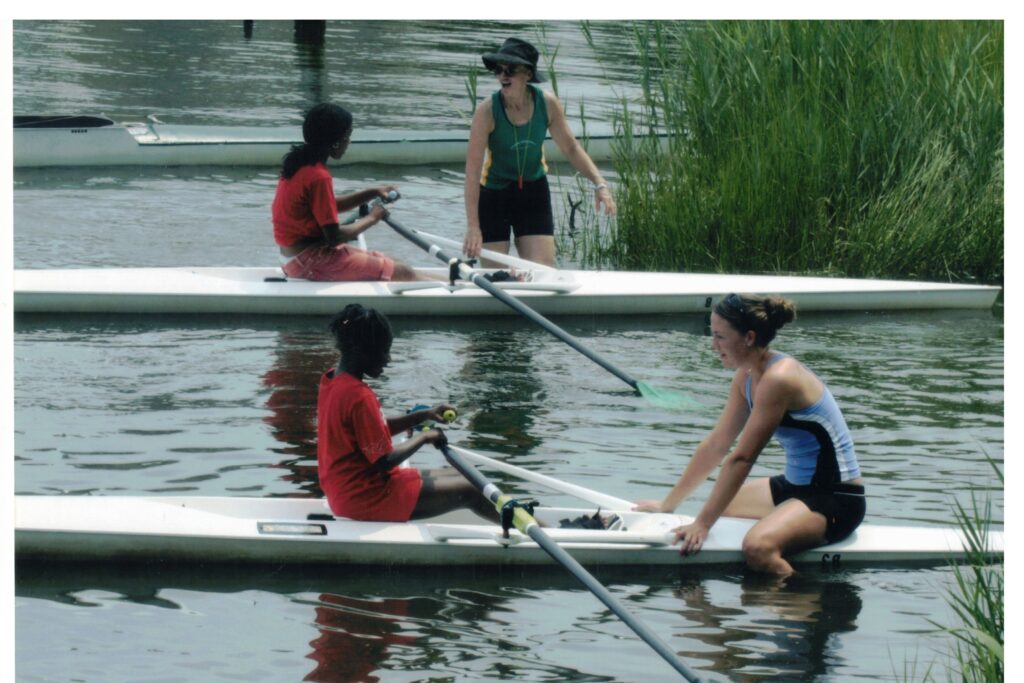
In 2002, the club partnered with Red Bank’s Department of Recreation to offer a day on the river to 35 children in the department’s summer day camp program. Although Red Bank has an extensive waterfront, public access is limited, and many of the children had never been close to the river. The day included a free lunch and an introductory lesson in rowing taught by club members. This successful event was repeated in following years.
2007 - Red Bank youth trying out rowing shells at a Day on the River event
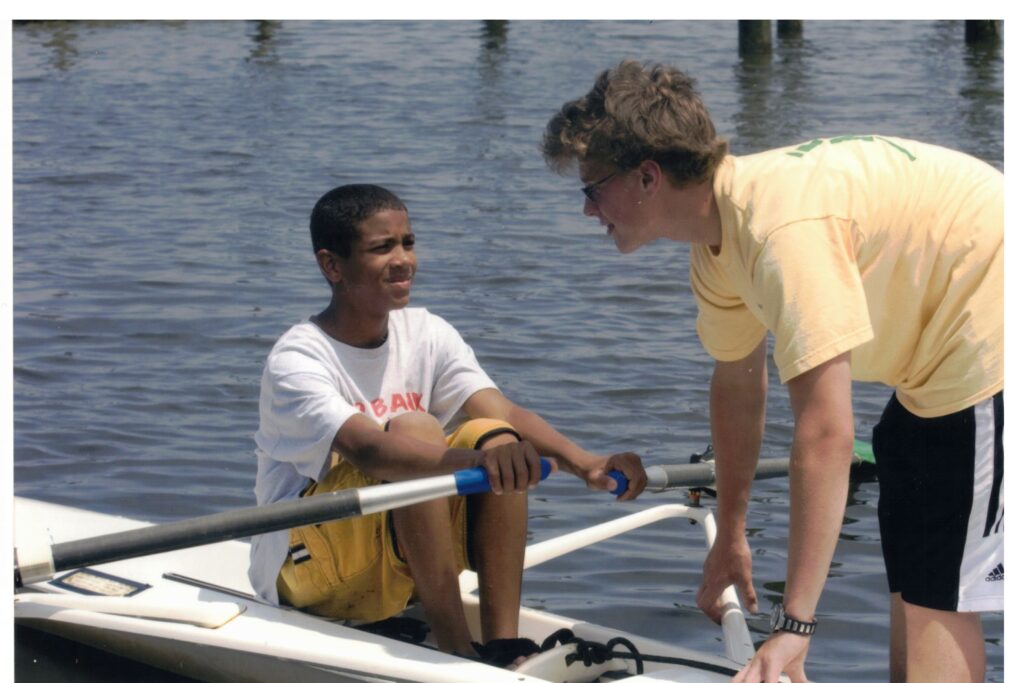
NRR expanded its outreach to area youth in 2008 by launching the Reach Out and Row (ROAR) program. Its purpose is to introduce rowing to teenagers in the local community who were not typically exposed to the sport so they might benefit from the increased levels of physical fitness, confidence, self-respect and goal setting that rowing engenders. ROAR provides grants to youth in the local area that allowed them to participate in a multi-week NRR summer rowing camp for free. The grants are funded by contributions from club members and generous individuals in the community.
In its initial year, the program gave grants to 3 teens, and by 2010, it had expanded to 8 teens.
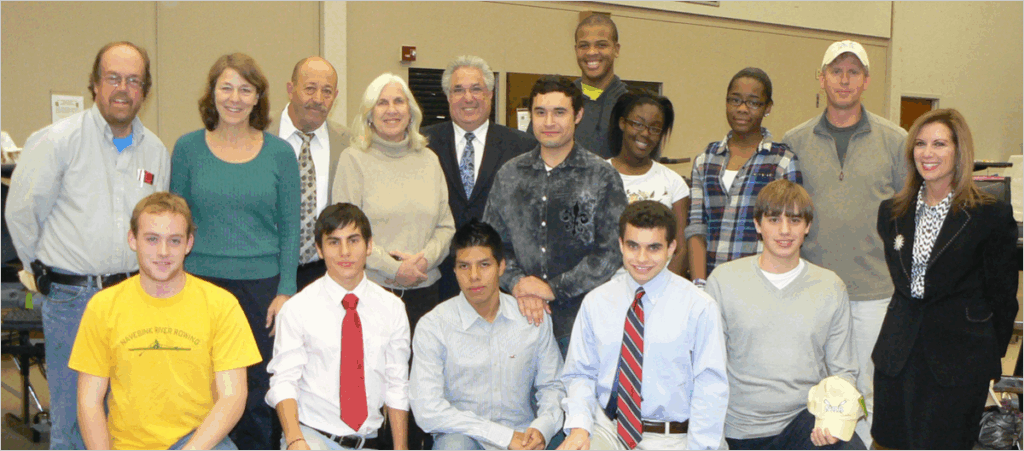
2010 - Red Bank Regional High School recognizes students and their NRR coaches in the ROAR program
In 2010, Navesink River Rowing teamed with the Riverview Medical Center Foundation to support “Paint the Town Pink,” a community-wide initiative to raise awareness and funds for breast cancer education and treatment. The club organized a PinkBank Regatta as a fundraising event. The regatta began on May 2nd at 7 am with Masters Women’s quad races. Events for NRR youth quads, youth, and masters doubles and singles followed. All told, NRR rowers raised $6000 for the Riverview Medical Center Foundation’s Pink Bank Fund.
Success on the Water
Yet to be completed – highlight successes of the youth and masters rowers in the “Red Bank” era.
Hurricane Sandy
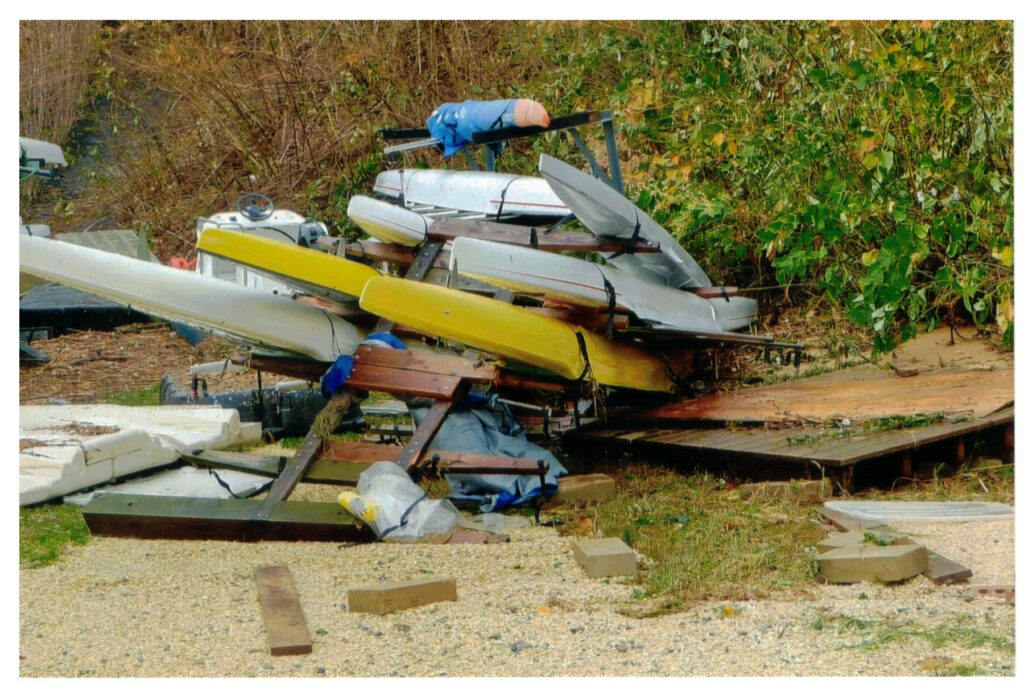
Hurricane Sandy struck the eastern seaboard of the United States on October 23, 2012 and Navesink River Rowing was one of the casualties. As the Navesink River is a tidal river, the storm surge from Sandy damaged some rowing shells at the club’s site, destroyed others, damaged storage sheds, and left the site littered with debris.
The aftermath of Hurricane Sandy at the club's site
Club members rallied to help with the recovery – by volunteering their time and physical labor and organizing and running a fundraising campaign. The club also received support from community partners like Springpoint Senior Living and K. Hovnanian Enterprises. The fundraising campaign succeeded in raising $26,000; this together with insurance covered the financial outlays needed for the recovery.
By 2013, site repairs had been completed and rowing was able to resume.
2013 - the club's site after Sandy recovery was completed